FOOD SERVICES · HOSPITALITY · OPERATIONAL SERVICES
Consistent service starts with prepared teams.
Every shift. Every site. Every contract.
Prepare and support the people who keep your operations running with short learning experiences, practice, and personalized support. From initial onboarding to everyday challenges in kitchens, customer service, cleaning, hospitality, and supervision, Closelly brings training to people through the web, app, or WhatsApp.


Your operation never stops.
New people, shifts, and contracts bring new challenges. Assigning a course is only the beginning: what matters is that each employee participates, understands, and can apply learning in their context.
We do not wait for people to come and learn. We reach out to them.
Closelly supports people with communications that invite them to start, return, and progress. Learning fits into their routine through the web, app, or WhatsApp, with short activities and relevant messages for every stage of the journey.
Resume outstanding onboarding before the next shift.

A clear path for every role.
Assign courses, learning paths, and other activities according to each employee's role. You can do this manually or through an employee-directory integration, supporting onboarding and role changes with relevant training.
Kitchen, cleaning, and supervisory teams can follow different paths.
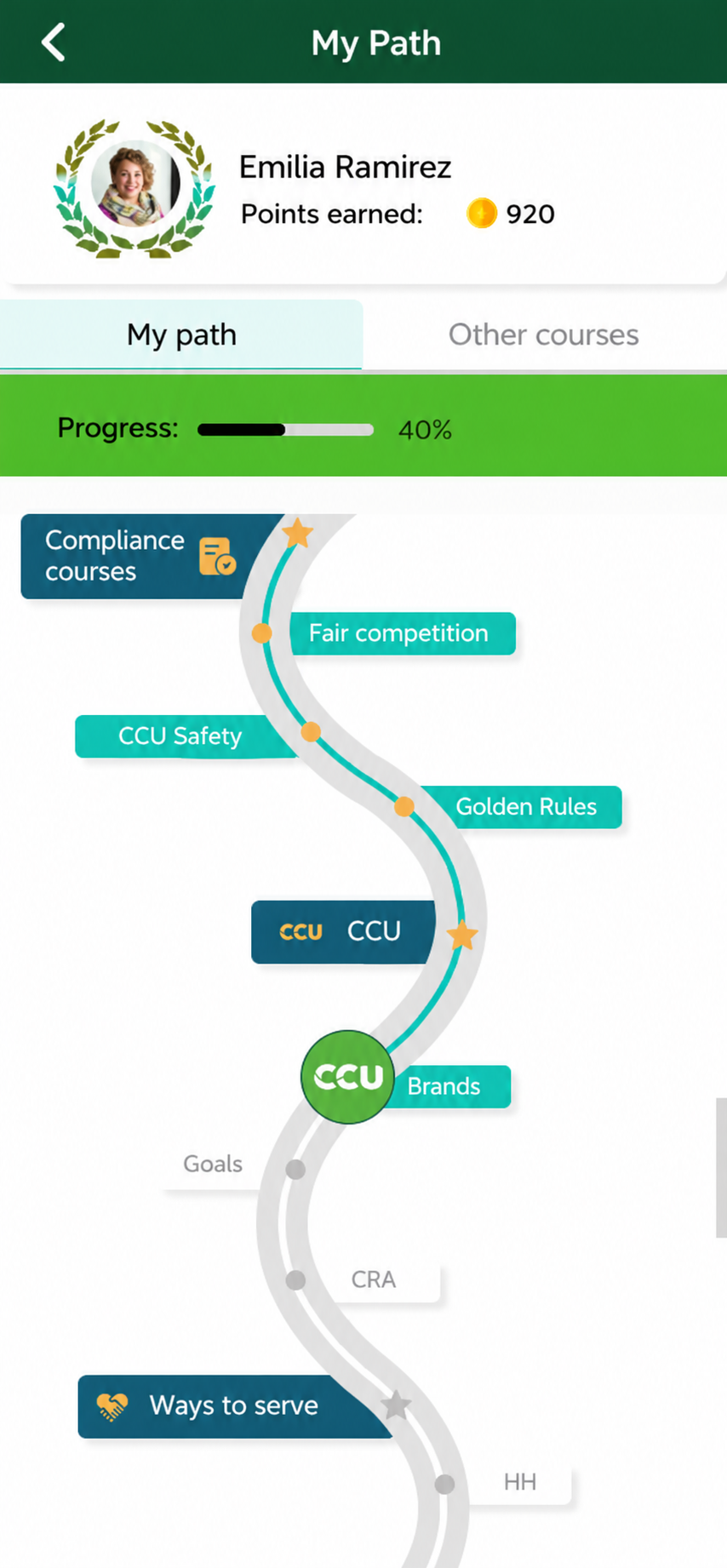
LENA supports each person according to their role.
The same explanation does not work equally well for kitchen, cleaning, or supervisory staff. LENA considers the employee's role to guide its answers and offer relevant examples based on organizational knowledge. Support connects with the situations each person faces at work.
Explain a procedure using examples from the kitchen shift.

Knowledge is the beginning. Practice makes the difference.
Role-plays let people rehearse conversations and situations before facing them in operations. They respond, receive feedback, and try again. You can work on serving a diner, communicating an incident, or giving feedback to the team.
Practice responding to a customer's concern.

Keep your teams informed, wherever they are.
People working in the field also need to stay connected with their organization. Share news, updates, and relevant communications, reinforced by push notifications in the app. Bring information to people who do not spend their day at a computer.
A service update or an important team communication.

Every step forward counts. Every achievement deserves recognition.
Challenges, points, badges, and recognition make progress visible. Combine individual goals and team activities to celebrate learning, encourage participation, and sustain the process. Motivation is about recognizing effort and moving forward, as well as competition.
Recognize a completed learning path or a new practice challenge.

Look beyond the completed course.
Training needs cannot be understood solely by looking at who completed a course. Combine diagnosis, responses, practice, and evidence to recognize where a person or team needs support. A training needs analysis helps guide the learning effort; follow-up lets you observe progress and adjust support.
Distinguish a knowledge gap from difficulty applying a procedure.
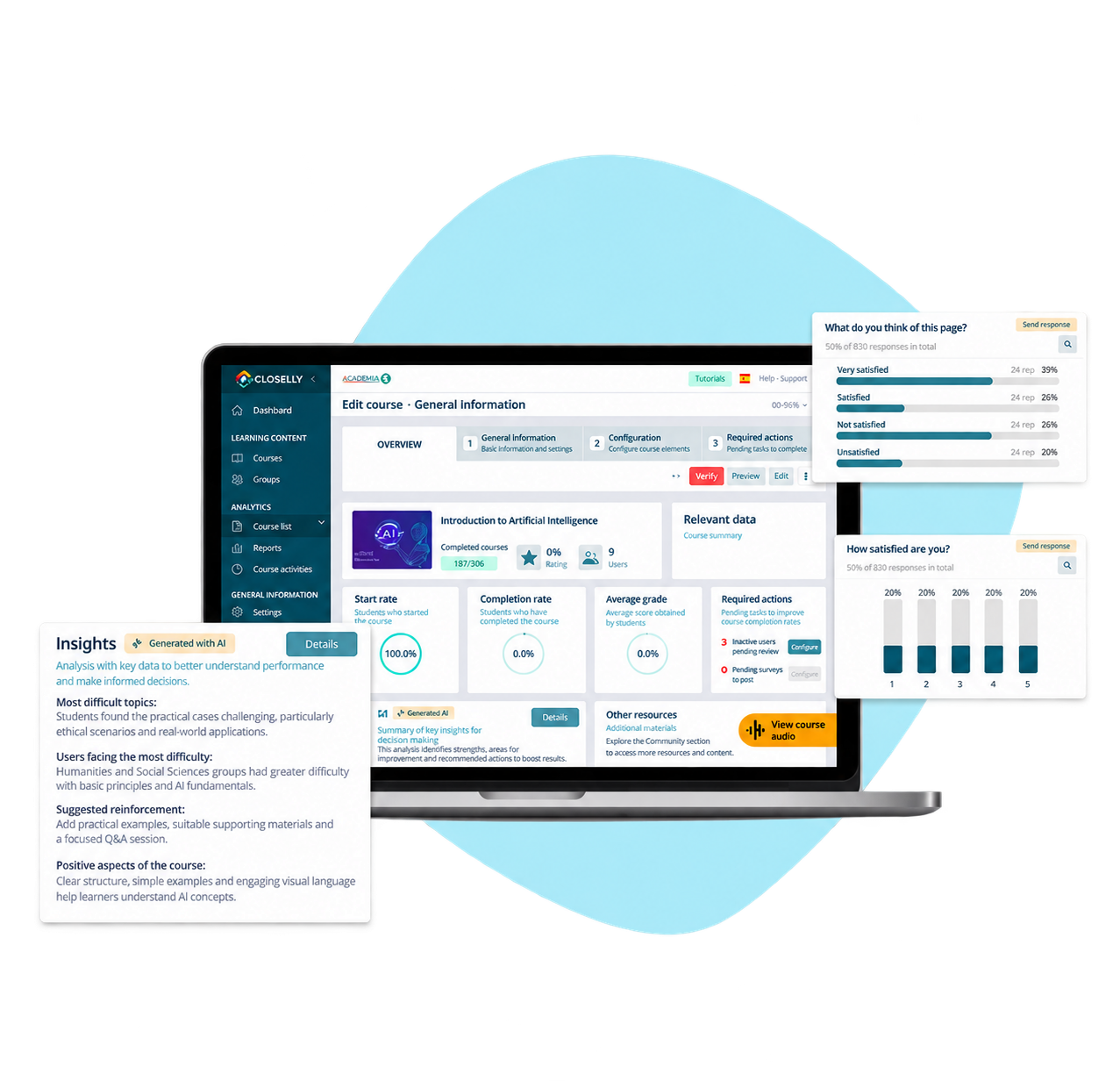
Information to guide better decisions.
Insights lets you explore available participation, progress, and result signals. Leaders can identify patterns, investigate difficulties, and decide what to reinforce. Evidence of learning—including photos, audio, or video when the activity allows it—adds context for interpreting results.
Review which content needs another explanation before repeating an entire training program.
Your training data, in your AI agent.
With MCP, an authorized administrator can query certain organizational data from a compatible AI assistant. The conversation helps review progress, compare available information, and explore relevant questions without granting unrestricted platform access or replacing decision-makers' judgment.
Read the video description and transcript
Description Duration: 60 seconds. Spanish audio and embedded subtitles. Demonstration using fictional data. The main video recreates ChatGPT connected to Closelly through MCP: it is not an actual recording and does not show client data. Fictional courses with completion rates of 80%, 70%, and 38% are compared. In Consultative Selling, 24 of the 62 learners who have not completed the course have not logged in to the platform for 7 days or more: 10 have not started and 14 are in progress. The follow-up plan is a suggestion; the assistant does not carry out actions. The opening and closing screens name ChatGPT, Claude, Gemini CLI, Copilot Studio, and other MCP-compatible AI agents, depending on their capabilities, permissions, and configuration. Transcript Your training. In your ChatGPT. Connect Closelly through MCP and access your organization's authorized data from your own assistant. Ask which course needs attention. In this example, Onboarding reaches eighty percent; Safety, seventy; and Consultative Selling, thirty-eight. ChatGPT turns the data into a clear comparison. Look deeper: twenty-four Consultative Selling learners have not completed the course and have not logged in to the platform for seven days or more. Ten have not started and fourteen are in progress. They account for twenty-four of the sixty-two learners who have not completed the course. Prepare the follow-up: contact these learners, review their barriers, and measure again in a week. The data guides you; you decide. Closelly, connected to ChatGPT and other MCP-compatible assistants. Your training data, in your conversation. Request a demo.
Start with a good question.
Which courses have the most people who have not started? Where is progress stalled? The answers help you decide what to review and what support to prepare. Scope depends on enabled tools and data, user permissions, and the configured integration.
The data guides you. Your team decides.

Less manual follow-up. More focus on preparing teams.
SENCE course integration and automated sworn declaration signature management help organize a process that often requires administrative follow-up. Connect the learning experience with these tasks according to your program's defined scope and configuration.
Support the signing process and review its status without relying on isolated manual reminders.

Your experience, turned into useful learning.
Your operational procedures and knowledge are the starting point. Create content with AI support or work with our team to design learning experiences. We turn information into clear activities, practice situations, and resources that make sense to the people who need to apply them.
Turn a service procedure into a short explanation and a situation to practice.


What does your team need to do better on its next shift?
Let's start with one team and one specific challenge. Define what they need to learn, which situations to practice, and what evidence will let us observe progress. From there, design an experience combining technology, content, and support for your operational context.
Activities, channels, services, and integrations are defined for each program.