Retail
A store opens with several first days
Gonzalo Oviedo, founder and CEO of Closelly · 26 de octubre de 2026 · 3 min de lectura
Cashiers, sales associates, and managers share a store, but need to prepare for different responsibilities. How to design onboarding by role, coordinate handoffs, and keep materials current, with support built into daily operations.
Designing role-based onboarding in retail
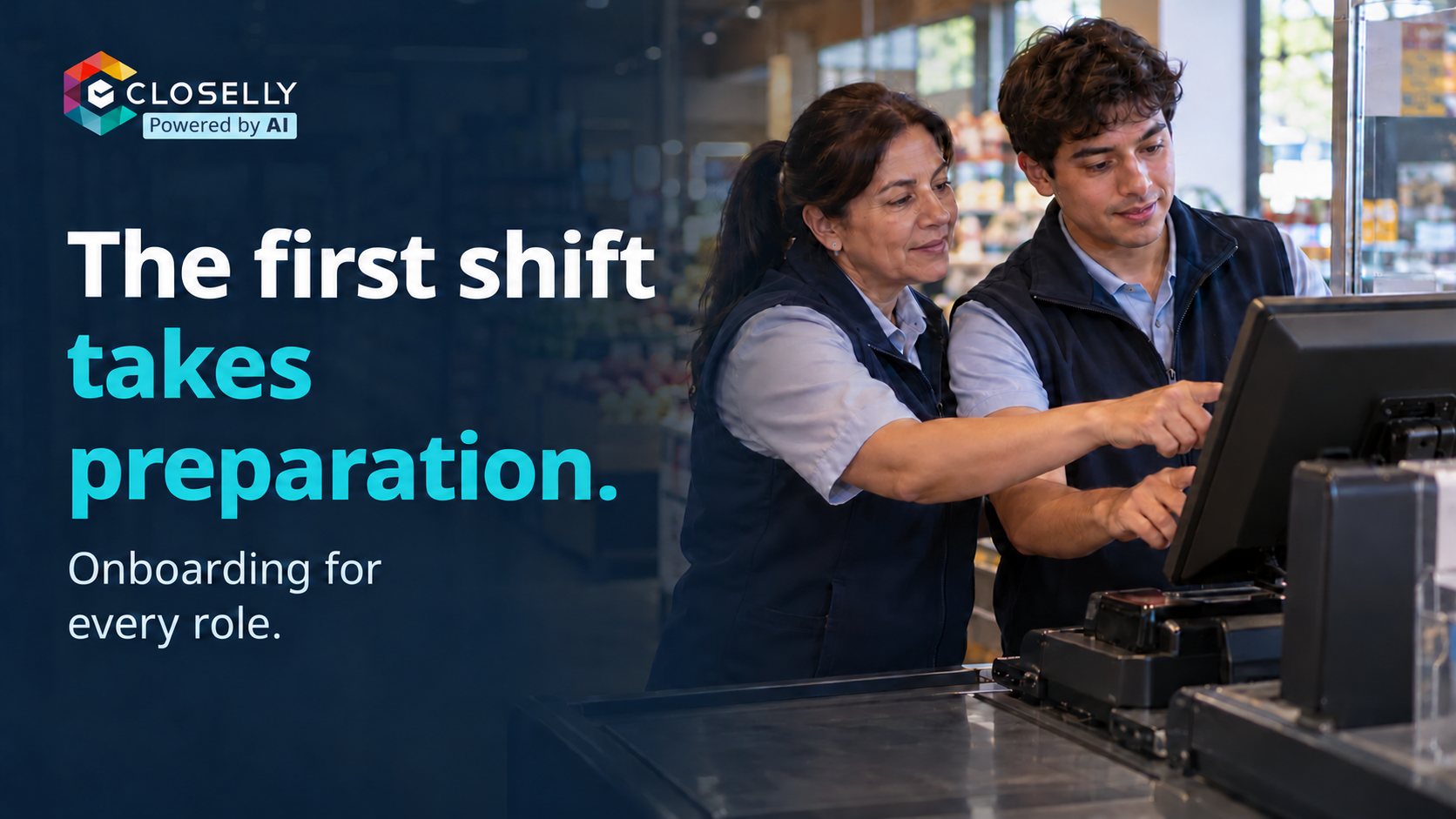
A store might welcome a cashier, a sales associate, and a new manager on the same Monday. They share a company, but their first day raises different questions.
Imagine a promotion that creates uncertainty: the sales floor needs to check its terms; checkout staff need to know which transactions require authorization; the manager needs to decide who reviews the exception. Onboarding must prepare each person for their part and for working with everyone else.
Start with what each role needs to resolve
Before producing courses, bring together training, operations, and a manager who knows the role. The question is specific: what does this person need to understand before taking on their tasks?
That conversation should produce observable objectives. At checkout, for example, these might include identifying authorization limits and the channel for requesting support. The company defines the procedure and decision-making authority; training helps employees understand it and find it when needed.
You also need to agree on time within the working day and someone available to provide support. Mobile access makes content easier to consult, but learning needs room within daily operations.
One shared foundation, three learning paths
The service culture and support channels can be shared. After that, the path should reflect each role's responsibilities:
- Checkout: consult the current procedure, recognize when to stop a transaction, and know whom to approach about an exception.
- Sales floor: find product and campaign information, check terms before communicating them, and understand how to consult other departments.
- Management: organize initial support, review recurring questions, and coordinate consistent answers.
This map is illustrative: each store needs its own definitions. A resource may serve several roles. If the terms of a promotion are shared, maintain one validated source and adapt the activity to what each person needs to do with it.

Practice the handoffs, too
Onboarding can break down between two roles. Someone understands their own task but does not know what information to pass to the next team.
Returning to the promotion: who consults the source, who can decide, and who communicates the answer? Walking through a case from beginning to end reveals these gaps before they appear in front of a customer. Sometimes a brief explanation and a supported conversation on the job are enough.
Changing roles also creates a new first day. Review which knowledge remains relevant, what needs to be added, and how the learning history will be preserved, based on the platform's actual configuration.
A learning path you can maintain
When a procedure changes, someone needs to update the material, validate it, and review the branches that use it. A simple record of the source, owner, and review date helps keep the path current.
In Closelly, learning paths organize courses into stages and define the order of progress. That structure requires prior decisions about content, assessments, and support. Job titles alone do not create relevant onboarding.
To get started, choose one role and an upcoming new hire. Organize the current materials, agree on who will provide support, and then review where questions remain. Completing activities shows progress; observation in the store provides information about application.
The first path can be small, as long as it helps the person understand their responsibility and find support.
Explore our solution for retail, consumer goods, and telecommunications.